Plastic Credit Card Mockup: A Strategic Asset for Professional Branding
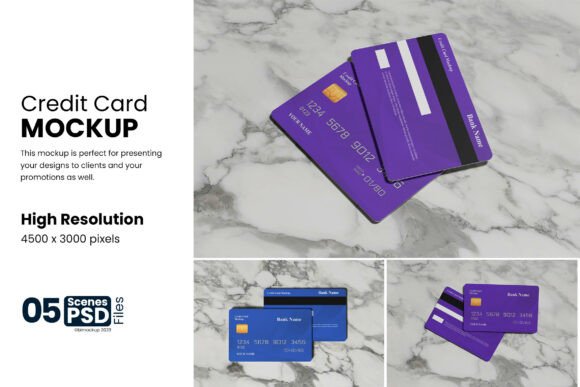
In the competitive landscape of financial services, fintech startups, and corporate gifting, the visual presentation of a credit card is often the first point of contact between a brand and its potential customer. A Plastic Credit Card Mockup serves as more than just a digital placeholder; it is a critical tool for validating design concepts before costly production begins. This item is suitable to showcase your designs professionally in a realistic 3D display, bridging the gap between abstract vector art and tangible product reality. For entrepreneurs and marketing professionals aged 20 to 50, understanding how to leverage this asset strategically can significantly impact decision-making processes regarding brand identity and market positioning.
The core value of a high-quality mockup lies in its ability to simulate physical attributes that flat screens cannot convey. When you utilize a Plastic Credit Card Mockup, you are not merely viewing a logo on a rectangle; you are assessing how textures, gradients, and metallic finishes interact with light and shadow. This simulation allows stakeholders to make informed decisions about material choices, color psychology, and overall aesthetic appeal without the expense of prototyping. The transition from a two-dimensional concept to a three-dimensional representation is where many design strategies either solidify or crumble.
The Strategic Advantage of Realistic 3D Visualization
Visual fidelity directly influences perception. In the realm of finance, trust is the currency, and a poorly presented design can inadvertently signal a lack of professionalism. A realistic 3D display provided by a premium mockup helps establish credibility immediately. By replacing the current designs with your own within seconds using smart-object features, you can rapidly iterate through multiple concepts. This agility is essential for modern businesses that need to pivot quickly based on feedback.
Consider the strategic implications of presenting a board meeting or a client pitch. Showing a flat JPEG file invites skepticism about how the final product will look in hand. Conversely, presenting a high-resolution render that mimics the curvature, gloss, and depth of actual plastic creates an emotional connection. It allows the viewer to visualize themselves holding the card, which is a powerful psychological trigger in sales and marketing. This level of detail supports better planning because it reduces the risk of "what I designed" versus "what I got" discrepancies during the manufacturing phase.
Technical Efficiency and Workflow Optimization
Efficiency in the creative process is not just about speed; it is about allocating resources to high-value tasks. The Plastic Credit Card Mockup described here offers a streamlined workflow specifically designed for professionals who need results without technical friction. Available in PSD Photoshop format with smart object features, this tool eliminates the need for complex manual adjustments or time-consuming rendering software.
The ability to replace the design easily and quickly is a game-changer for productivity. Instead of spending hours masking layers or manually adjusting perspective, designers can double-click the smart object layer, paste their artwork, and save. The system automatically applies the correct lighting, shadows, and distortions. This feature set includes organized layers and folders, ensuring that even complex projects remain manageable. With a resolution of 4500×3000px at 300 DPI, the output quality meets professional printing standards, making these files suitable for both digital presentations and large-format print materials.
Furthermore, the inclusion of adjustment lights and changeable background colors provides a level of customization that rigid templates lack. You can tailor the environment to match your brand's mood—switching from a clean, minimalist white background for a corporate feel to a dark, moody setting for a luxury lifestyle brand. The option to change shadow color allows for precise integration into various marketing collateral, ensuring consistency across all touchpoints.
Key Features for Decision Makers
- High Resolution: At 4500×3000px, every detail remains crisp, preventing pixelation when zoomed in or printed.
- Smart Object Integration: Facilitates non-destructive editing, allowing for infinite iterations without degrading image quality.
- Organized Structure: Clearly labeled layers and folders reduce cognitive load and prevent errors during collaboration.
- Customizable Lighting and Shadows: Adjustment layers enable fine-tuning of the scene to match specific branding guidelines.
- Format Versatility: Delivered as 5 distinct PSD files, offering varied angles and contexts for comprehensive storytelling.
Intentional Use Cases and Planning
To derive maximum value from a Plastic Credit Card Mockup, one must approach its use with clear objectives. Random application of design assets rarely yields strategic results. Instead, consider the following scenarios where this tool becomes indispensable:
Brand Identity Validation: Before committing to a new logo or color palette for a financial institution, test it on the card surface. Does the hologram placement obscure the logo? Is the text legible against the gradient? These questions are best answered visually using a mockup rather than theoretically.
Marketing Campaign Development: Digital ads and social media posts require eye-catching visuals. Using a mockup allows you to create dynamic imagery that stands out in crowded feeds. You can generate multiple variations to A/B test different design elements, gathering data on what resonates most with your audience.
Client Presentations and Proposals: For freelancers and agencies, the difference between winning and losing a contract often comes down to presentation quality. Delivering a proposal that includes photorealistic renders demonstrates attention to detail and a commitment to excellence. It shows the client that you have already thought through the final execution.
Internal Stakeholder Alignment: Within an organization, different departments may have varying interpretations of a design brief. A realistic 3D display serves as a single source of truth, aligning engineering, marketing, and executive teams on the visual direction before any physical samples are produced.
Risks of Contextless Application
While the utility of a Plastic Credit Card Mockup is significant, there are risks associated with using it without a clear strategy. One common pitfall is relying solely on the visual appeal of the mockup while neglecting functional design principles. A beautiful card that is difficult to read or lacks necessary security features is ultimately a failure. The mockup should be a tool for validation, not a substitute for rigorous design thinking.
Another risk is over-customization. While the ability to change background colors and shadows is a feature, excessive tweaking can lead to "design by committee," where the original intent gets lost in endless minor adjustments. It is crucial to define the desired outcome early and use the mockup to test against those specific criteria. Additionally, users must remember that images and photographs included in the presentation are for demonstration purposes only. Relying on stock photography within the mockup for final deliverables can lead to copyright issues or a disjointed brand narrative.
Furthermore, assuming that a digital render perfectly predicts the physical product can be dangerous. While the Plastic Credit Card Mockup simulates realism, it cannot replicate the tactile feel of embossed numbers or the exact texture of spot UV coating. It is wise to use the mockup as a preliminary step, followed by physical prototyping for final approval. Understanding the limitations of the digital tool ensures that expectations are managed correctly throughout the project lifecycle.
Long-Term Value and Operational Impact
Investing time in mastering tools like this mockup yields long-term operational benefits. By standardizing the way designs are presented, organizations can streamline their approval processes and reduce the number of revision cycles. The efficiency gained from using smart objects translates directly into cost savings, as less time is spent on administrative design tasks and more time is dedicated to creative problem-solving.
Moreover, the availability of a PDF guide alongside the 5 PSD files ensures that knowledge transfer is smooth. Whether you are training new team members or collaborating with external partners, having a documented workflow reduces confusion and accelerates onboarding. This structured approach fosters a culture of precision and accountability, where every visual asset serves a deliberate purpose in the broader business strategy.
Ultimately, the Plastic Credit Card Mockup is more than a graphic resource; it is a strategic instrument for communication and planning. It empowers creators and decision-makers to visualize success before it happens, mitigating risks and enhancing the quality of the final product. By using this tool intentionally, with a focus on clarity, consistency, and context, you can elevate your brand's presence and drive better outcomes in an increasingly visual world. The goal is not just to make a pretty picture, but to create a compelling argument for your brand's value, supported by the undeniable power of professional visualization.