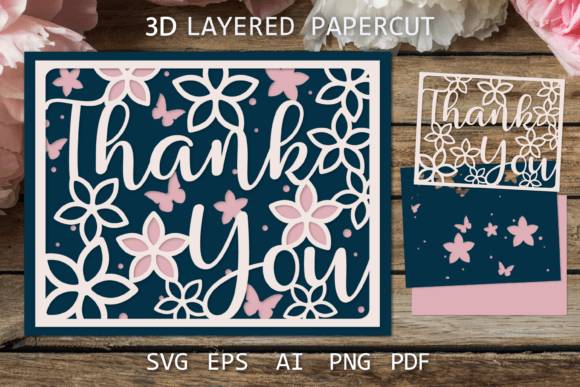
Thank You Card SVG Layered Papercut
In a digital world where screens dominate our communication, the tactile experience of receiving a physical card carries a weight that an email simply cannot match. A Thank You Card SVG Layered Papercut design offers more than just a message; it delivers a moment of surprise and delight through its three-dimensional structure. This isn't merely about saying "thanks"; it is about creating a keepsake that stands out on a desk or in a home office. The layered papercut style transforms a standard greeting into a piece of art, utilizing depth and shadow to create visual interest that flat designs often lack.
For designers, small business owners, and hobbyists alike, these templates bridge the gap between professional branding and personal sentiment. Whether you are thanking a client for a partnership, acknowledging a wedding gift, or simply brightening someone's day without a specific occasion, the visual personality of this design speaks volumes. It feels crafted, intentional, and premium. The aesthetic relies on the interplay of layers, where each cut-out element sits atop another, creating a sense of dimensionality that invites the recipient to explore the card from different angles.
The Visual Appeal of 3D Layered Designs
The charm of a Thank You Card SVG Layered Papercut lies in its ability to mimic traditional paper engineering while leveraging modern digital precision. Unlike a standard print job where ink sits on the surface, this design utilizes negative space and overlapping elements to build a narrative. When you open the card, the layers unfold or stand proud, revealing hidden details that might be obscured in a single-layer format.
This style is particularly effective because it engages the viewer physically. The shadows cast by the raised layers add a dynamic quality that changes as the lighting shifts or as the recipient tilts the card. In terms of modern typography and layout, the text usually integrates seamlessly with the graphical elements, ensuring that the message remains legible while contributing to the overall composition. The result is a design that feels both timeless and contemporary, suitable for a wide range of audiences from corporate executives to close friends.
From a brand identity perspective, using such a detailed design signals attention to detail. It suggests that the sender values the relationship enough to invest time and creativity into the gesture. For entrepreneurs and marketers, this level of thoughtfulness can significantly enhance customer retention and brand perception. It moves the interaction from a transactional exchange to an emotional connection.
Technical Specifications and File Versatility
One of the primary advantages of working with a Thank You Card SVG Layered Papercut template is the flexibility provided by vector-based files. The design comes in an A2 card format, measuring 5.5 x 4.25 inches, which is a standard size for greeting cards. However, because the core assets are vector files, you are not limited to this dimension. You can scale the design up for large posters or down for small tags without losing any resolution.
The package typically includes a compressed ZIP file containing various formats to suit different workflows:
- SVG Files: These are essential for users of cutting machines like Cricut and Silhouette. They allow for precise cutting of each layer, ensuring clean edges and accurate alignment. The SVGs include both colored and black-separated layers, giving you control over color placement during the cutting process.
- EPS10 and AI Files: Ideal for professional graphic designers using Adobe Illustrator or other vector software. These files allow for deep customization, enabling you to tweak shapes, adjust curves, and modify the entire layout before production.
- PNG Files: High-quality raster images with transparent backgrounds. These are perfect for digital mockups, social media graphics, or if you prefer to print the design directly onto cardstock using a high-resolution printer rather than cutting it.
- PDF Files: Colored versions ready for immediate printing, ensuring that your colors remain consistent across different devices.
The inclusion of separated layers—both in color and black—is a critical feature for advanced customization. It allows you to experiment with different paper textures and colors for each layer, creating unique variations of the same design. This modularity is what makes the digital card template so powerful; it serves as a robust foundation upon which you can build countless personalized iterations.
Strategic Applications in Branding and Marketing
While the primary use case is obvious—sending thank you notes—the application of this design extends far beyond personal correspondence. In the realm of packaging design, elements from this template can be adapted for box inserts or premium unboxing experiences. Imagine a small business owner including a layered thank you card inside a product package; it elevates the perceived value of the product and creates a memorable brand touchpoint.
For editorial design and publishing, the intricate nature of the papercut style can inspire cover art or internal chapter dividers. The depth and texture translate well to print media, adding a tactile element that readers appreciate. Even in web design, the PNG versions with transparent backgrounds can be used to create engaging hero sections or interactive elements that give a website a handcrafted feel.
When considering font pairing within these designs, the choice of typeface becomes crucial. Since the background elements are complex and layered, the text needs to be clear and distinct. A clean sans serif font often works best to contrast against the organic shapes of the papercut layers, ensuring readability without competing for attention. Alternatively, a sophisticated script font or handwritten font can add a personal touch, mimicking the signature of the sender. The key is to maintain a strong visual hierarchy where the message is immediately apparent despite the decorative background.
Practical Guidance for Creators and Crafters
If you are new to using Thank You Card SVG Layered Papercut files, the learning curve can be minimal if you approach it methodically. Start by extracting the ZIP file and organizing your assets. If you are using a cutting machine, ensure your software (like Cricut Design Space or Silhouette Studio) is updated to handle the latest SVG standards. Load the SVG file, and you will likely see the layers automatically stacked. From here, you can assign different materials to each layer.
Testing is a vital step. Before committing to expensive cardstock, run a test cut on scrap paper to check the alignment and nesting of the layers. Pay attention to the kerf—the width of the blade—as it can affect how tightly the layers fit together. Adjustments in the software may be necessary to ensure a snug fit without gaps.
For those focusing on commercial licensing, always verify the usage rights included with your download. Most premium templates offer licenses for commercial use, allowing you to sell the finished cards or incorporate the design into products you sell. However, redistributing the raw files themselves is typically prohibited. Understanding these boundaries ensures you can leverage the design for your business without legal complications.
Ultimately, the decision to use a layered papercut design should be driven by the story you want to tell. Is your brand playful and whimsical? Does your message require a touch of elegance and sophistication? The versatility of the Thank You Card SVG Layered Papercut allows you to answer these questions creatively. By combining high-quality vector assets with thoughtful material choices, you transform a simple gesture into a lasting impression that resonates with your audience long after the card has been read.