Mastering the Birthday Card Retro Style, Layered Card Workflow
In the realm of professional design and creative production, the Birthday Card Retro Style, Layered Card represents more than just a nostalgic aesthetic; it is a structured asset designed for efficiency and scalability. Whether you are a small business owner running a boutique stationery line, a marketing professional creating branded event materials, or an educator planning classroom celebrations, understanding how to integrate these digital assets into your workflow is essential. This approach moves beyond simple decoration, transforming a static image into a dynamic component of a larger production pipeline.
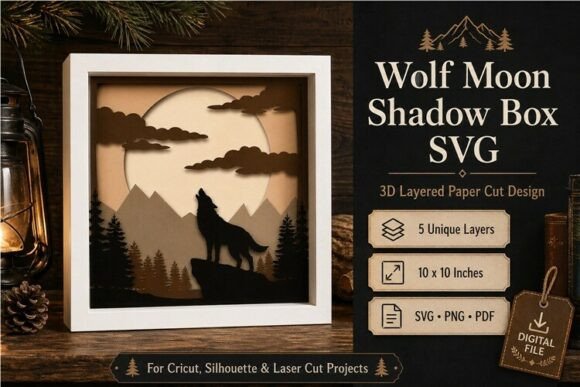
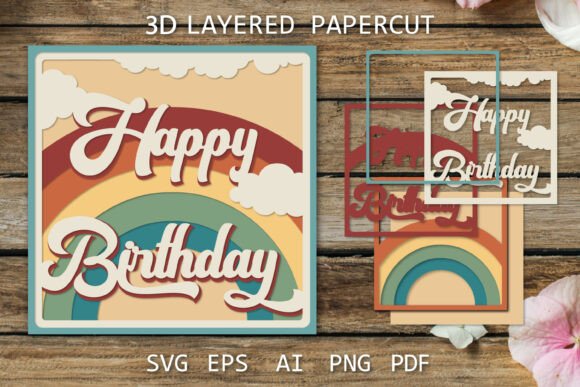
The core value of a retro layered birthday card lies in its modularity. Unlike flat raster images that lock you into a single size and color scheme, this design philosophy utilizes vector-based separation. This allows creators to manipulate individual elements—such as the typography, background patterns, and foreground illustrations—independently. By adopting a Birthday Shadow box 3D perspective within a digital environment, designers can simulate depth and texture without the physical limitations of paper cutting until the final print stage. This flexibility is critical for professionals who need to adapt a single master file for various output requirements, from social media graphics to large-format prints.
Integrating Assets into Your Creative Process
Effective implementation begins before the design software is even opened. The process starts with asset management and preparation. When you acquire a package containing a Birthday card Retro style, Layered Birthday paper cut card, the first step is always extraction and organization. These files typically arrive compressed in a ZIP file to ensure data integrity during transfer. Upon extracting the contents, you will encounter a suite of formats including EPS10, AI, PNG, SVG, and PDF. Each serves a distinct purpose in the production lifecycle.
For the initial design phase, the EPS10 and AI files are your primary tools. These vector formats allow for infinite scaling without quality loss, which is vital when resizing a birthday card template to fit different standard sizes like A5, A6, or custom dimensions. The ability to change colors easily within these files means you can align the card's palette with specific brand guidelines or seasonal themes instantly. For instance, a corporate client might request a retro birthday card that matches their company colors; with separated layers, you can swap a vintage pink for a corporate blue in seconds without redrawing the entire illustration.
Once the vector adjustments are complete, the workflow often shifts toward compatibility testing and rasterization. Here, the included PNG Files become invaluable. These high-quality raster images feature transparent backgrounds and are often provided in both colored and black-separated layers. Using these PNGs allows you to preview how the card will look on digital platforms or composite them into larger mockups for client presentations. The black-separated layers are particularly useful for print workflows where spot colors or specific ink separations are required, ensuring that the retro aesthetic translates accurately to the press.
Technical Compatibility and File Management
A robust workflow depends on understanding how different file types interact with your existing toolset. The inclusion of SVG Files in the package bridges the gap between desktop publishing and web-based applications. If your project involves creating an interactive digital greeting or embedding the card design into a website, the SVG format ensures crisp rendering across all devices. Like the AI files, the SVGs offer colored and black-separated layers, giving you granular control over the visual hierarchy even in a browser environment.
For final output and archiving, the PDF Files serve as the universal standard. These files preserve the layout, fonts, and color profiles exactly as intended, making them ideal for sending to printers or sharing with stakeholders who do not have access to Adobe Illustrator. The "colored" designation in the PDF ensures that the recipient sees the final visual intent immediately, reducing back-and-forth communication regarding color accuracy.
Consistency is key when managing these diverse file types. It is advisable to establish a naming convention that reflects the file's purpose and version. For example, keeping the original extracted files in a "Source" folder and saving your modified versions in a "Production" folder prevents accidental overwrites. This organizational discipline is crucial when working with complex projects involving multiple Birthday Shadow box 3D variations. By maintaining a clear directory structure, you ensure that the transition from concept to final product remains smooth and error-free.
Practical Applications for Professionals
The versatility of the Birthday Card Retro Style, Layered Card extends across various professional sectors. In the marketing industry, these assets can be repurposed for email campaigns, social media banners, or promotional flyers. The retro aesthetic often evokes a sense of authenticity and warmth, which can be leveraged to humanize a brand's messaging during employee recognition programs or customer appreciation events.
For entrepreneurs and small business owners, the ability to customize these cards offers a cost-effective solution for personalized gifts. Instead of purchasing expensive pre-made cards, you can use the vector files to create unique designs that reflect your brand identity. The layered nature of the files allows you to experiment with different text placements and graphic elements, enabling rapid prototyping. You can test several color combinations and layouts quickly, selecting the best option before committing to a bulk print run.
Freelancers and publishers also benefit from the high resolution and transparency of the provided assets. When compiling a collection of holiday greetings or designing a book cover with a celebratory theme, the Layered Birthday paper cut card elements can be integrated seamlessly. The black-separated layers are especially useful for monochrome printing options, allowing the design to maintain its structural integrity even when stripped of color.
Optimizing Quality Control and Efficiency
To maximize the utility of these assets, focus on quality control at every stage of the workflow. Before finalizing any design, inspect the vector paths in the AI or EPS files to ensure there are no stray points or broken links. Check the transparency settings in the PNG files to confirm that the edges are clean and free of halos. For print projects, verify that the color mode is set correctly (CMYK for print, RGB for digital) to avoid unexpected shifts in the retro color palette.
Efficiency is achieved by leveraging the non-destructive editing capabilities of vector files. Since all elements are available as separate layers, you can toggle visibility to see how the design functions with or without certain components. This is particularly helpful when adapting a full-color design for a simplified version or when creating a variation for a different demographic. The ability to scale the design up or down without losing clarity ensures that the same asset can be used for a small postcard or a large poster, maximizing the return on investment for the purchased resource.
Long-term use of these assets requires a strategic approach to storage and updates. Keep the original ZIP file and the extracted folders in a secure backup location. As design trends evolve, having access to the source files allows you to revisit and update the retro style to fit new contexts while retaining the core aesthetic. This adaptability ensures that your creative library remains relevant and functional over time.
Conclusion: Streamlining Your Design Output
The Birthday Card Retro Style, Layered Card is a powerful tool for anyone involved in visual communication. By understanding the specific roles of each file format—from the editable vectors of AI and EPS to the versatile raster images of PNG and SVG—you can streamline your production process significantly. This structured approach minimizes technical friction, allowing you to focus on creativity and execution. Whether you are crafting a personal gift or delivering a professional campaign, integrating these layered assets into your workflow ensures high-quality, consistent, and scalable results. The combination of retro charm and modern file management makes this resource an indispensable addition to any designer's toolkit.