Love Bunny Cookie Cutter 3D Model for 3D Printing: A Practical Evaluation
The Love Bunny Cookie Cutter 3D Model for 3D Printing represents a specific niche within the digital fabrication community, bridging the gap between culinary arts and additive manufacturing. This digital asset is designed to be sliced and printed on FDM (Fused Deposition Modeling) 3D printers to create a functional kitchen tool. Unlike traditional metal cutters found in retail stores, this model offers a customizable, multi-layer design featuring an adorable bunny holding a heart. For hobbyists, bakers, and makers, understanding the capabilities and limitations of this specific STL file is essential before committing to a print job.
Understanding the Design and Functionality
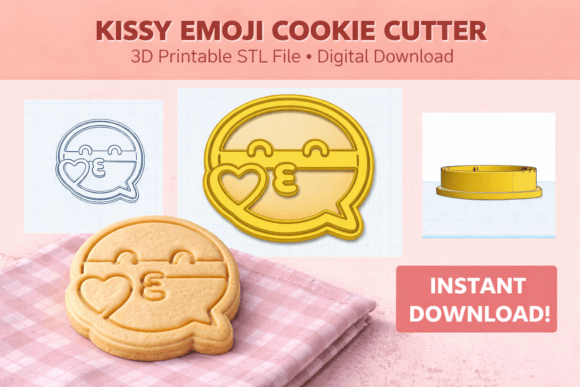
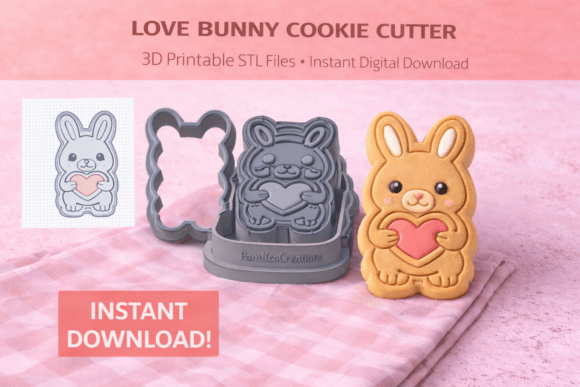
The core concept behind the Love Bunny Cookie Cutter 3D Model is dual functionality: cutting and stamping. The design typically utilizes a multi-layer structure where one layer provides the cutting edge to shape the dough, while another layer acts as a stamp to imprint details onto the surface. In this specific iteration, the imagery depicts a bunny clutching a heart, making it particularly relevant for seasonal baking events such as Easter or Valentine's Day.
When evaluating this model, it is important to note that the final physical object is derived from a digital file, usually in STL format. The user receives two high-quality files intended to be assembled or printed as a cohesive unit. The design includes raised details intended to transfer crisp lines into soft materials like cookie dough, fondant, or polymer clay. The outer grip is engineered to provide leverage during the pressing motion, ensuring the cutter penetrates the material without slipping.
Reasons to Consider a 3D Printed Cutter
There are several practical reasons why a baker or maker might choose the Love Bunny Cookie Cutter 3D Model for 3D Printing over purchasing a pre-made alternative. The primary advantage lies in customization. While store-bought cutters come in fixed sizes, a 3D printed version allows the user to scale the dimensions directly within their slicer software. If a standard 2.5-inch cutter is too large for a specific recipe or too small for a decorative purpose, the digital nature of the file permits immediate adjustment.
Furthermore, this approach appeals to those who enjoy the process of creation as much as the result. For individuals who already own a 3D printer, the marginal cost of producing the cutter is limited to filament and electricity, which is often significantly lower than buying specialty novelty cutters. Additionally, having the digital file ensures longevity; if the physical cutter breaks or wears down, it can be reprinted at any time without needing to search for a replacement product.
Benefits and Tradeoffs
Evaluating the benefits requires a balanced look at performance versus durability. One distinct benefit of this model is the clean, sharp impression it aims to deliver. The deep stamp lines are designed to capture fine details that might be lost with softer, less rigid materials. The inclusion of a comfortable outer grip also addresses a common ergonomic issue found in some mass-produced plastic cutters, offering better control during use.
However, there are tradeoffs to consider regarding material safety and longevity. Most home 3D printers utilize PLA or PETG filaments. While these materials are generally food-safe when used correctly, they are not as durable as stainless steel. Over time, the cutting edges may dull, especially if used frequently or on hard doughs. There is also the consideration of hygiene; 3D printed objects have microscopic layer lines where bacteria could theoretically accumulate if not cleaned thoroughly. Users must ensure the printed cutter is washed carefully and dried completely after each use.
Situations Where This Model Excels
The Love Bunny Cookie Cutter 3D Model is a strong fit for specific scenarios. It is ideal for occasional bakers who need a themed tool for a single event, such as a spring party or a holiday gift exchange. Because the design is digital, it serves well for small-scale production runs where variety is desired. For example, a parent preparing treats for a child's birthday might find this specific bunny design more appealing than generic shapes available in stores.
It is also highly suitable for users working with fondant or modeling clay. These materials are softer than dense cookie dough and do not require the extreme hardness of metal to achieve a clean cut. The stamping feature shines here, allowing for intricate texturing that adds professional flair to homemade desserts. Additionally, for 3D printing enthusiasts looking to test their slicing skills or experiment with different infill percentages, this model provides a practical, functional project.
When Alternatives May Be Preferable
Despite its advantages, there are situations where a traditional metal cutter or a professionally manufactured plastic tool might be the better choice. For commercial bakeries or high-volume home production, the durability of a 3D printed cutter is likely insufficient. Metal cutters withstand repeated stress, dishwasher cycles, and abrasive cleaning without degrading. If the goal is to produce hundreds of cookies daily, the risk of the printed edge chipping or warping makes a metal alternative a safer investment.
Furthermore, users who do not possess a 3D printer will find this model impractical. The cost of acquiring a printer, filament, and the necessary learning curve to slice and print the file effectively outweighs the cost of buying a ready-made cutter. In this context, searching for a similar design in a retail catalog would be more efficient. Similarly, if strict food safety certifications are required for a business setting, the regulatory ambiguity surrounding home-printed food contact surfaces suggests sticking to certified commercial tools.
Practical Decision-Making Insights
To determine if the Love Bunny Cookie Cutter 3D Model for 3D Printing aligns with your needs, consider your frequency of use and technical capability. If you are a hobbyist with access to a printer and plan to use the cutter for special occasions, the benefits of customization and low cost are compelling. Ensure you follow recommended print settings, such as using a 0.2 mm layer height and 15–25% infill, to maximize structural integrity. Choosing PLA or PETG is standard, but verifying the filament's food-safety rating is a prudent step.
If you prioritize long-term durability and ease of maintenance above all else, or if you lack 3D printing equipment, investing in a stainless steel cutter is the logical path. Ultimately, this digital model offers a creative solution for seasonal baking and personalized gifting, provided the user understands the limitations of 3D printed plastics in a kitchen environment. By weighing the flexibility of the digital file against the robustness of traditional materials, you can make an informed decision that best suits your baking goals.