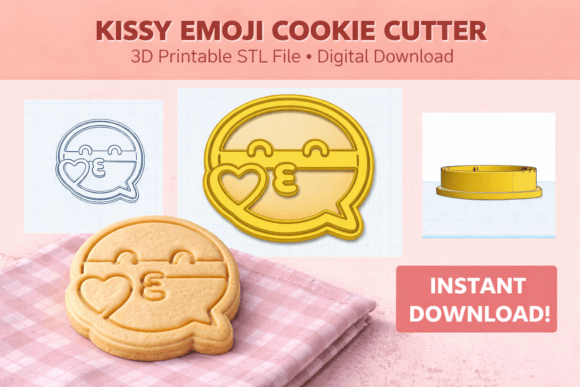
Kissy Emoji Cookie Cutter 3D Model for 3D Printing
Adding a touch of personality to your baking has never been more accessible, especially when you have the right tools at your disposal. The Kissy Emoji Cookie Cutter 3D Model for 3D Printing represents a shift from mass-produced plastic molds to customizable, durable kitchen accessories that fit your specific needs. Whether you are preparing treats for Valentine's Day, a wedding dessert table, or a casual family gathering, this digital file allows you to create clean, adorable shapes instantly. However, simply downloading an STL file does not guarantee a perfect cookie every time. Understanding how to approach this project correctly can save you hours of frustration and wasted material.
Why Choose a Digital Cookie Cutter?
The appeal of the Kissy Emoji design lies in its versatility and the control it offers creators. Unlike store-bought cutters that come in fixed sizes and often degrade after repeated washing, a 3D printed version gives you the freedom to scale the design. You might need a tiny cutter for cupcake toppers or a larger one for statement cookies at a bridal shower. By using the Kissy Emoji Cookie Cutter 3D Model for 3D Printing, you ensure that the tool is made specifically for your workflow, with walls thick enough to withstand dough pressure without bending.
This approach is particularly valuable for small business owners and hobbyists who want to offer unique products without investing heavily in custom metal molds. The ability to print on demand means you only produce what you need, reducing waste and storage clutter. Furthermore, the emoji aesthetic remains a timeless trend, making these cutters suitable for everything from kids' parties to romantic anniversaries.
Common Pitfalls When Printing Cookie Cutters
Despite the simplicity of the concept, many beginners encounter issues that compromise the final result. One of the most frequent mistakes is ignoring the importance of wall thickness. If you slice the model with settings intended for a decorative figurine rather than a functional tool, the resulting cutter may be too flimsy. When you press a thin-walled cutter into dense fondant or stiff cookie dough, the sides can bow outward, ruining the shape and leaving uneven edges.
Another overlooked detail is surface finish. A standard print with visible layer lines can cause dough to stick, making release difficult and tearing the delicate kissy lips or heart details. Without proper preparation, you might find yourself struggling to get the cookie out intact, leading to frustration and ruined batches. Additionally, some users attempt to use materials that are not food-safe or lack the necessary rigidity, such as flexible filaments, which defeat the purpose of a cutting tool.
Optimizing Your Print Settings for Success
To avoid these common errors, you must tailor your slicing parameters specifically for functional kitchenware. The recommended material for the Kissy Emoji Cookie Cutter is PLA, known for its stability and ease of printing. However, the settings matter just as much as the filament choice. Aim for a layer height of 0.2 mm to balance speed with strength. More importantly, do not skimp on infill. While 15–20% infill is sufficient for structural integrity, ensure your slicer uses a pattern like gyroid or cubic that distributes stress evenly across the tool.
Wall thickness is critical. The design should be optimized to provide sturdy walls that resist bending under pressure. If you are scaling the model up significantly, consider increasing the number of perimeters (walls) in your slicer software. This ensures that the outer shell is robust enough to cut through tough dough without deforming. Remember, supports are generally not required for this flat design, but if you add a handle or modify the geometry, plan accordingly to avoid messy removal processes that could mar the cutting edge.
Ensuring Food Safety and Durability
A crucial consideration that often gets missed is the interaction between the printed plastic and food. While PLA is generally considered safe for contact with dry foods like cookies, it is porous and can harbor bacteria if not treated properly. For long-term use and peace of mind, applying a food-safe epoxy resin coating to the finished cutter is a highly recommended step. This seals the layer lines, creating a smooth, non-stick surface that makes releasing the cookies effortless and ensures the tool meets hygiene standards.
Furthermore, durability extends beyond the initial print. Avoid exposing your 3D printed cutter to high heat, such as placing it directly in a hot oven or dishwasher, unless you have verified the material's heat resistance and applied a protective sealant. Hand washing with mild soap is the best practice to maintain the structural integrity of the Kissy Emoji shape over time. By taking these precautions, you transform a simple digital download into a professional-grade kitchen tool.
Practical Tips for Scaling and Customization
One of the greatest advantages of the Kissy Emoji Cookie Cutter 3D Model for 3D Printing is scalability. The default size of approximately 2.5 inches wide works well for standard cookies, but you can easily adjust this in your slicer software. If you are planning a large event, printing multiple sizes can add visual interest to your dessert table. Just remember that scaling affects the aspect ratio; always check the proportions to ensure the "kissy" expression remains recognizable and doesn't look distorted.
If you require a specific size that isn't listed, don't hesitate to reach out to the creator for custom adjustments. Many sellers are happy to resize files to meet unique requirements, ensuring the structural integrity remains intact even at non-standard dimensions. This personalized approach prevents the guesswork involved in manually resizing files, which can sometimes lead to weak points in the geometry.
Evaluating the Value Before You Buy
Before purchasing any digital cookie cutter file, take a moment to evaluate what you are receiving. Ensure the listing includes high-quality STL files that are tested for smooth cutting results. A poorly designed file might have gaps, non-manifold edges, or unnecessary complexity that leads to print failures. Look for descriptions that mention single-piece designs, as these eliminate the need for assembly and reduce potential failure points during printing.
Consider the total cost of ownership, including the price of the filament and the time spent printing. Compared to buying multiple physical cutters for different occasions, a digital download is often more economical and environmentally friendly. It empowers you to create exactly what you need, when you need it, without waiting for shipping or dealing with inventory constraints.
By approaching the Kissy Emoji Cookie Cutter 3D Model for 3D Printing with the right mindset and technical knowledge, you can avoid common pitfalls and enjoy a seamless baking experience. Whether you are a seasoned maker or a beginner looking to add a little love to your treats, this tool offers a creative and practical solution for all your festive baking needs. With the correct settings and a bit of care, your homemade cookies will be as charming and perfectly shaped as the emoji itself.