Dress Jewelry Holder – Trinket Dish STL: A Practical Guide to Elegant Organization
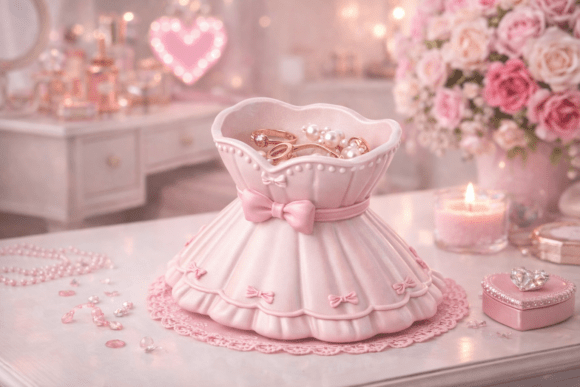
For makers, designers, and individuals seeking functional decor, the Dress Jewelry Holder – Trinket Dish STL represents more than just a digital file; it is a solution for organizing personal spaces with style. This specific 3D model combines a stylized dress form with an integrated dish, creating a dual-purpose object that serves as both a jewelry organizer and a decorative accent. Whether you are setting up a new vanity, curating a gift for a fashion enthusiast, or expanding your product line as a small business owner, understanding how to implement this design effectively can streamline your workflow and enhance the final result.
The value of this STL file lies in its ability to merge utility with aesthetics. Unlike generic bowls or boxes, the dress silhouette adds a thematic layer that resonates with fashion-conscious users. By integrating this item into your home organization strategy or your 3D printing production schedule, you address two common pain points simultaneously: the clutter of loose accessories and the lack of personalized decor. The following guide explores how to prepare for, execute, and utilize this design within various workflows.
Integrating the Design into Your Workflow
Before initiating the print job, it is essential to view the Dress Jewelry Holder – Trinket Dish STL as part of a broader planning process. For hobbyists, this might mean assessing available desk space on a nightstand or dresser. For entrepreneurs, it involves calculating material costs, print time, and potential market demand. The design's compact footprint makes it versatile, fitting seamlessly onto bathroom counters, bedroom vanities, or entryway tables without overwhelming the surface area.
When planning your project, consider the intended environment. If the holder will sit on a busy dresser used for daily makeup application, durability and ease of cleaning become priority factors. Conversely, if it is destined for a quiet nightstand primarily for holding rings and earrings, the focus shifts to aesthetic appeal and the smoothness of the finish. Understanding these variables early ensures that your post-processing steps align with the end-user's needs.
Preparation and Compatibility
Successful implementation begins with proper preparation. The Dress Jewelry Holder STL is optimized for standard FDM (Fused Deposition Modeling) printers, making it accessible to both beginners and experienced operators. However, the specific requirements of your slicer software and filament choice will dictate the quality of the output. Before slicing, inspect the model orientation. The design features a flat base for stability, but the raised details of the dress form require careful consideration regarding support structures.
Compatibility extends beyond the printer hardware. Ensure your chosen filament color complements the surrounding decor. While the file is provided as a single-color STL, the design intentionally includes slightly raised details. These features are not merely decorative; they serve as a foundation for multi-color customization. Planning your color scheme at this stage prevents wasted material and unnecessary reprints later in the process.
Execution Strategies for Multi-Color Finishes
One of the most compelling aspects of this design is its adaptability to various finishing techniques. Many users desire the vibrant, multi-colored look often seen in promotional photos. Achieving this result requires a strategic approach during the execution phase. You have three primary pathways to customize the appearance, each with distinct advantages depending on your resources and technical skill level.
Method 1: Post-Processing with Paint
For those who prefer traditional crafting methods, painting offers the highest degree of control. Since the dress details are slightly raised, applying acrylic paint becomes a straightforward task. You can mask off the main body and airbrush or hand-paint the skirt, bodice, and collar areas in contrasting colors. This method is ideal for small batches or one-off gifts where precision is key. It allows for gradients, textures, and metallic finishes that filament swaps cannot easily replicate.
Method 2: Slicer-Based Color Assignment
If you utilize advanced slicers like Bambu Studio, PrusaSlicer, or Cura, you can leverage their built-in paint tools. This digital workflow allows you to assign different materials or colors to specific regions of the model before printing begins. By selecting the raised details and assigning them a secondary filament slot, the printer automatically switches colors during the build. This technique reduces manual labor and ensures crisp color boundaries, making it highly efficient for repeatable production runs.
Method 3: Manual Filament Swaps
For printers without automatic dual-extrusion capabilities, manual filament swapping remains a viable option. This requires pausing the print at specific layer heights to change spools. While more labor-intensive, it eliminates the need for post-print painting and provides a durable, fused finish. Success here depends on precise layer counting and timing, so running a test print or simulation in your slicer is recommended to identify the exact swap points for the dress details.
Optimizing Quality and Usability
The transition from digital file to physical object hinges on quality control. The Dress Jewelry Holder – Trinket Dish STL is designed to print cleanly, but achieving a professional look requires attention to settings. A layer height of 0.16mm to 0.2mm typically balances detail retention with print speed. For the smoothest surface on the dish portion, which will come into contact with delicate jewelry, consider enabling "Ironing" in your slicer settings or using a higher infill density near the perimeter.
Usability is another critical factor. The dish component must be large enough to hold rings and stud earrings securely without them rolling out, yet small enough to maintain the proportional balance of the dress form. During the initial print, verify that the rim of the dish is even. If imperfections occur, light sanding can smooth the edges, ensuring that sharp metal jewelry does not get scratched during use. This attention to detail enhances the long-term value of the item.
Workflow Integration for Business Owners
For small business owners and Etsy sellers, this STL file can be integrated into a streamlined production workflow. Batch processing multiple units allows for consistent quality and reduced setup time. By standardizing your color schemes—such as offering a "classic black," "pastel pink," or "gold accent" version—you can manage inventory more effectively. Furthermore, packaging the finished product with care instructions for cleaning and handling adds a professional touch that increases customer satisfaction.
Marketing this item also benefits from understanding its practical applications. Highlighting its role as a "vanity organizer" or "gift for fashion lovers" helps target specific demographics. When listing the product, emphasize the customization options available through painting or multi-material printing, as this appeals to customers looking for unique, personalized decor.
Long-Term Maintenance and Care
Once the Dress Jewelry Holder is in use, maintaining its appearance ensures longevity. The material choice plays a significant role here. PLA is biodegradable and easy to print but may warp in high-heat environments like a bathroom with frequent hot showers. PETG or ABS offers greater heat resistance and durability, making them preferable for bathroom counters. Educating the end-user on these material properties can prevent damage and ensure the item remains a staple in their routine.
Cleaning is straightforward due to the smooth surfaces created by modern printing techniques. A soft cloth and mild soap solution are usually sufficient to remove dust or residue. Avoid harsh chemicals that might degrade the plastic or strip any applied paint. Regular maintenance keeps the organizer looking fresh and continues to provide the organizational benefits intended by the design.
Conclusion on Implementation
The Dress Jewelry Holder – Trinket Dish STL serves as a versatile asset for anyone looking to improve organization through creative fabrication. By approaching the project with a clear plan—from selecting the right filament and slicer settings to executing precise post-processing—you ensure a high-quality outcome. Whether used as a personal tool to declutter a vanity or as a product to sell, this design bridges the gap between functional necessity and artistic expression. Its integration into your workflow demonstrates how thoughtful planning and execution can transform a simple digital file into a tangible, elegant solution for everyday life.