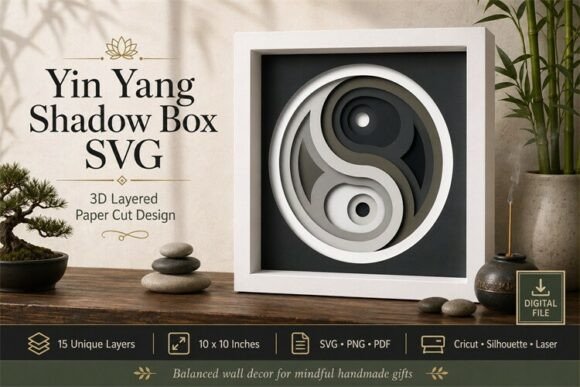
Yin Yang Shadow Box: Creating Depth Without the Frustration
The Yin Yang Shadow Box is more than just a decorative object; it is a study in balance, depth, and precision. When executed correctly, this 15-layered papercut art transforms a flat symbol of duality into a three-dimensional masterpiece that commands attention while fostering a Zen atmosphere. Whether you are furnishing a yoga studio, a meditation room, or a modern living space, the goal is to create a piece that feels like a professional gallery installation. However, achieving that sophisticated look requires more than just downloading a file and hitting "cut." The difference between a stunning focal point and a frustrating pile of paper often lies in understanding the nuances of layered shadow art.
Understanding the Power of Layered Depth
Many creators approach shadow boxes with the expectation that any cut file will produce a deep, dimensional effect. This is a common misunderstanding. A standard two-dimensional Yin Yang design lacks the visual complexity required to draw the eye inward. The true magic of the Yin Yang 3D Shadow Box SVG lies in its 15 unique layers. Each layer is meticulously engineered to sit slightly above the one before it, creating an illusion of infinite depth and fluid movement.
Without these distinct layers, the artwork appears flat and loses its symbolic weight. The intricate curves of the Yin Yang symbol rely on the interplay of light and shadow to convey harmony and mindfulness. If the spacing between layers is inconsistent or if the design lacks sufficient steps, the result is a muddy image rather than a crisp, ethereal composition. This is why selecting a design specifically optimized for multi-dimensional papercraft is critical. You aren't just buying a shape; you are purchasing a calculated architectural structure made of paper.
Pitfalls in File Selection and Format Compatibility
One of the most frequent mistakes makers encounter involves file compatibility. Beginners often download generic vector files without verifying their format or resolution, only to discover they are unusable in their preferred software. For a project as detailed as a 15-layer shadow box, the integrity of the digital file is paramount.
Avoid the trap of using low-resolution images or poorly constructed vectors. If your file is not properly nested or if the paths are open, your cutting machine—whether it is a Cricut, Silhouette, or a Glowforge laser cutter—will struggle to interpret the design. This leads to jagged edges, misaligned cuts, and wasted material. To ensure success, always verify that your download includes high-quality SVG files optimized for design software like Cricut Design Space or Silhouette Designer Edition. Additionally, having a high-resolution PNG with a transparent background allows you to visualize the final assembly before you make a single cut, saving you time and resources.
Material Choices That Make or Break the Project
Another overlooked detail is the choice of material. While the design may be perfect, the wrong paper stock can ruin the structural integrity of the shadow box. Many hobbyists reach for standard printer paper or thin cardstock, assuming it will suffice because it is easy to cut. Unfortunately, these materials often lack the rigidity needed to maintain the spacing between 15 layers over time. They tend to warp, sag, or tear under the weight of the upper layers, causing the delicate curves of the Yin Yang to collapse.
For a premium result, invest in heavy-weight cardstock or specialty papercraft paper that holds its shape. The thickness must be consistent across all sheets to ensure the layers stack evenly. If you are using a laser cutter, be mindful of how different materials react to heat; some papers may curl or discolor, detracting from the clean, monochromatic aesthetic essential to the Yin Yang symbol. Testing a small section of your chosen material before committing to the full 15-layer set is a simple step that prevents significant disappointment later.
The Importance of Precision Engineering
Even with the right materials, assembly errors can undermine the entire project. A common mistake is rushing through the gluing process or failing to align the layers accurately. Because the Yin Yang Shadow Box relies on subtle shifts in position to create depth, even a millimeter of misalignment can disrupt the visual flow. If the center point of each layer does not match perfectly, the symbol will appear lopsided, destroying the sense of balance it is meant to represent.
To avoid this, use a dedicated registration system or a shadow box frame with precise guides. Some creators find success by stacking all layers and securing them temporarily with clips before applying adhesive. Take your time during this phase. The patience you invest here directly correlates to the professional quality of the final piece. Remember, this is a DIY experience designed to be rewarding, but it demands respect for the engineering behind the design. Precision ensures that the final artwork looks like it belongs in a high-end gallery rather than a craft fair.
Evaluating Your Digital Download Before You Start
Before you begin cutting, take a moment to audit what you have received. A comprehensive digital download should include everything needed for a seamless workflow. Check that your ZIP folder contains the necessary formats: SVG for cutting machines, PNG for reference, and PDF for manual hand-cutting if you prefer a traditional approach. Ensure the files are organized and clearly labeled. Disorganized folders can lead to confusion, causing you to cut the wrong layer or miss a crucial component entirely.
Furthermore, verify that the design includes instructions or a preview of the layer order. Understanding which layer goes where is essential for maintaining the correct depth progression. If the seller has provided a guide, read it thoroughly. If not, use the PNG reference to map out your assembly strategy. Being prepared reduces stress and allows you to focus on the creative aspect of the project.
Embracing Balance in Your Creative Process
Ultimately, the Yin Yang Shadow Box is a reflection of the balance we seek in our lives. It serves as a daily reminder of harmony, peace, and the interconnectedness of opposites. By avoiding common pitfalls in file selection, material choice, and assembly, you ensure that the physical manifestation of this philosophy is as flawless as the concept itself. Do not settle for a mediocre result when a little extra care can elevate your home decor to something truly exceptional.
Whether you are a seasoned papercrafter or a beginner looking to expand your skills, approaching this project with intention and attention to detail will yield a sophisticated piece of wall art. Embrace the challenge of the 15 layers, respect the precision required, and enjoy the process of bringing this timeless symbol to life. With the right tools and mindset, your Yin Yang Shadow Box will become a centerpiece that inspires tranquility and admiration for years to come.