Mental Health 3D Icons: Visualizing Wellness in a Digital Age
The conversation around mental well-being has shifted dramatically from a private struggle to a public priority. In the digital landscape, this cultural evolution demands more than just text; it requires visual language that resonates with empathy, clarity, and calm. This is where Mental Health 3D Icons become essential tools for modern creators. As businesses, educators, and individuals strive to communicate complex emotional concepts, the need for assets that bridge the gap between clinical seriousness and approachable warmth has never been greater. These icons are not merely decorative elements; they are strategic components of a design system that prioritizes user comfort and emotional intelligence.
In an era where screen time dominates daily life, the visual aesthetics we consume directly impact our psychological state. Harsh lines, jarring colors, and flat, sterile graphics can subconsciously induce stress or detachment. Conversely, soft, rounded forms and pastel palettes signal safety and relaxation. The Mental Health 3D Icons set addresses this nuance by offering a collection of ten thoughtfully designed assets that represent emotional well-being, mindfulness, self-care, and mental balance. By integrating these visuals into websites, apps, presentations, and marketing materials, professionals can create environments that feel inviting rather than demanding.
The Evolution of Wellness Visuals
Design trends have always mirrored societal values. A decade ago, corporate wellness was often represented by generic clip art or stiff stock photography of people shaking hands or stretching in boardrooms. Today, the expectation is higher. Audiences aged 20 to 50, who span from digital natives to established business leaders, possess a sophisticated understanding of what authentic care looks like. They expect brands and platforms to reflect a deeper commitment to their holistic health.
This shift has driven the adoption of three-dimensional design in the wellness sector. Unlike flat vector art, which can sometimes feel distant or abstract, 3D rendering adds depth, texture, and a tangible sense of presence. When a user sees a brain icon rendered with soft lighting and gentle curves, it feels less like a medical diagram and more like a symbol of potential and growth. The transition from flat to 3D in mental health imagery reflects a broader movement toward humanizing digital experiences. It acknowledges that mental health is a lived, three-dimensional reality, not a two-dimensional checklist.
The relevance of Mental Health 3D Icons extends beyond aesthetics. It aligns with the current market preference for "soft UI" and friendly interfaces. As technology becomes more integrated into therapy, meditation, and productivity workflows, the interface must not feel cold. The use of pastel colors and calming gradients in these icons helps reduce cognitive load, allowing users to focus on the content rather than being distracted by aggressive visual stimuli. This subtle psychological effect is crucial for platforms dedicated to mindfulness and recovery.
Decoding the Symbols of Balance
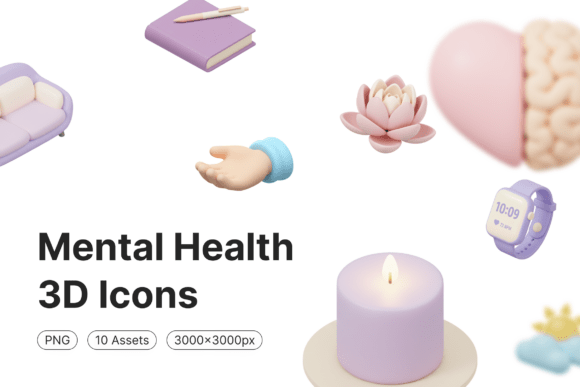
Effective communication relies on shared symbols. The Mental Health 3D Icons collection includes ten specific assets, each chosen to represent a different facet of the wellness journey. Understanding the narrative behind these symbols allows creators to deploy them with intention and accuracy.
- The Brain: Often associated with logic, this icon in the set represents the cognitive aspect of mental health—clarity, focus, and neuroplasticity.
- Heart–Brain Connection: This powerful symbol bridges emotion and intellect, reminding users that feelings and thoughts are inextricably linked.
- Lotus Flower: A universal emblem of rebirth and purity, the lotus signifies the process of blooming despite difficult circumstances, central to mindfulness practices.
- Candle: Representing stillness and presence, the candle icon evokes the act of slowing down and finding light in the darkness.
- Sofa: Perhaps one of the most relatable symbols, the sofa suggests a safe space for rest, therapy sessions, or simply decompressing after a long day.
- Journal: This asset highlights the importance of reflection, gratitude, and processing emotions through writing.
- Sunrise: Symbolizing new beginnings and hope, the sunrise is a potent reminder that every day offers a fresh start.
- Drink Cup: Whether representing tea, coffee, or water, this icon emphasizes hydration and the ritual of taking a moment for oneself.
- Smartwatch: Acknowledging the role of technology in health, this symbol connects physical metrics with mental awareness.
- Supportive Hand Gesture: Finally, the hand gesture underscores the critical need for community, empathy, and reaching out for help.
Together, these assets form a comprehensive vocabulary for discussing mental health. They move beyond the stigma of illness and focus on the proactive aspects of maintenance and growth. For marketers and educators, having a cohesive set that covers everything from the internal (the brain) to the external (the supportive hand) ensures that messaging remains consistent and holistic.
Practical Applications for Professionals and Creators
For entrepreneurs, bloggers, and business owners, the practical implications of using high-quality visual assets cannot be overstated. In a crowded digital marketplace, trust is the currency of engagement. When a wellness app, a coaching website, or a corporate HR portal uses professional, high-resolution imagery, it signals competence and care. The Mental Health 3D Icons set provides exactly this level of professionalism without requiring a massive budget for custom illustration.
Consider the workflow of a freelance designer creating a landing page for a meditation app. Instead of spending hours modeling 3D objects or searching for disjointed stock photos that clash in style, they can utilize these ready-to-use assets. The fact that all assets come with a transparent background streamlines the integration process. Designers can drop the icons onto any color scheme, overlay them on photographs, or animate them within video content without technical friction. This efficiency allows creatives to focus on strategy and storytelling rather than asset production.
Furthermore, the resolution of these files plays a critical role in modern display standards. With the prevalence of Retina displays, 4K monitors, and high-density mobile screens, low-resolution graphics look pixelated and unprofessional. These icons are provided at high-resolution 3000x3000px, ensuring crisp edges and smooth gradients regardless of the device. This technical quality supports the brand's image, reinforcing the message of premium care and attention to detail.
For educators and therapists building online courses or digital workbooks, these icons serve as excellent visual anchors. A slide deck discussing stress management becomes more engaging when paired with the candle or sofa icon. A blog post about journaling benefits from the immediate visual cue of the journal asset. These symbols break up walls of text, guide the reader's eye, and reinforce key takeaways through visual association.
Technical Specifications and Usage Guidelines
While the artistic value of these icons is significant, their utility is defined by their technical specifications. The set includes 10 PNG Assets, making them universally compatible with web browsers, presentation software, graphic design suites, and social media schedulers. The PNG format preserves the transparency, allowing for seamless layering over complex backgrounds—a common requirement in modern web design where solid blocks of color are often replaced by organic shapes and images.
It is important to note the nature of these digital assets for proper planning. While the designs are versatile, all assets cannot be changed in color and shape. This fixed nature is actually a benefit for maintaining brand consistency across a project. Because the color palette is curated to be soft and calming, there is no risk of a user accidentally selecting a jarring neon shade that contradicts the intended mood. The pastel tones are pre-calibrated to evoke tranquility, removing the guesswork from the design process.
Creators should view these assets as finalized pieces of art rather than editable templates. This distinction encourages a design approach that focuses on composition and layout rather than manipulation. If a project requires a specific brand color that differs significantly from the provided pastels, these icons may need to be used in contexts where their natural tone complements the brand, or they may serve as accent elements rather than primary branding marks. However, for the vast majority of wellness-focused projects, the inherent color scheme is precisely what is needed to convey the right message.
Building a Culture of Care Through Design
Ultimately, the adoption of Mental Health 3D Icons is about more than just filling a design brief. It is a conscious choice to participate in a culture that values mental well-being. Every time a professional selects these icons for a newsletter, a website, or a social media campaign, they are contributing to a visual environment that normalizes the discussion of mental health.
As we move forward, the line between digital interaction and human connection will continue to blur. Technology will increasingly play a role in how we monitor, manage, and improve our mental states. The tools we use to visualize this journey must be worthy of the task. They must be clear, comforting, and credible. This collection of ten assets offers a robust foundation for that work, providing a visual shorthand for the complexities of the human mind.
Whether you are a startup founder launching a wellness product, a therapist digitizing your practice, or a content creator aiming to support your audience, these icons offer a reliable, high-quality solution. They embody the principles of mindfulness and balance in their very form. By integrating them into your creative workflow, you ensure that your message is received not just intellectually, but emotionally. In a world that often feels chaotic, the ability to present a calm, structured, and empathetic visual identity is a powerful advantage—one that starts with the right icons.